Digital Tread Depth Gauge: Track Tire Wear Accurately
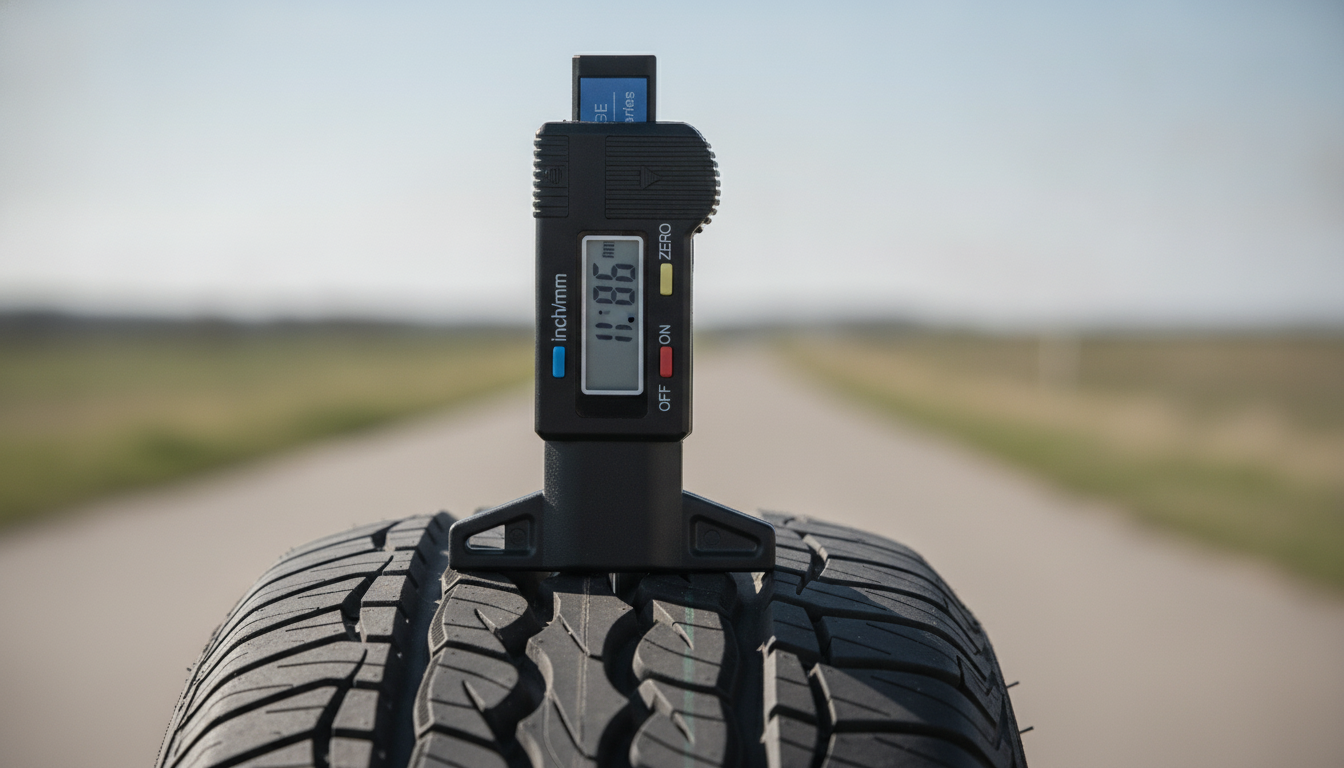
Digital Tread Depth Gauge for Tires – Accurate Wear Measurement for Toyota, Ford, Honda
A digital tread depth gauge makes it easy to check tire wear with clear numbers instead of guesswork. Regular measurements help spot uneven wear early, confirm when tires are nearing replacement, and support safer braking and wet-weather traction—especially on daily drivers from Toyota, Ford, and Honda where tire rotations and alignments are part of routine maintenance.
What a Digital Tread Depth Gauge Does
A digital tread depth gauge measures how much usable tread is left on a tire. Instead of relying on visual checks or a quick coin test, it gives a repeatable measurement that can be logged over time.
- Measures remaining tire tread depth by placing the probe in a tread groove and reading the display
- Helps track wear over time with repeatable readings compared with coin checks
- Supports quick checks across all four tires to identify mismatched wear patterns
- Useful for verifying tread depth before long trips, seasonal changes, or inspection appointments
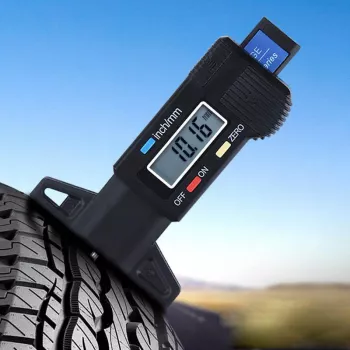
If you want a simple tool that fits in a glovebox, the Digital Tread Depth Gauge for Tires – Accurate Wear Measurement for Toyota, Ford, Honda is designed for fast checks without special setup.
How to Measure Tread Depth Correctly
Accurate tread readings depend on consistency. Measuring the same way each time helps you see real trends instead of random variations.
- Park on a flat surface, engage the parking brake, and ensure tires are cool
- Check multiple grooves across the tire (inner, center, outer) to catch alignment or inflation issues
- Place the gauge base flat on the tread blocks and lower the probe into the groove until it bottoms out
- Record readings for each tire position (front left, front right, rear left, rear right) to track changes
- Repeat monthly or every 1,000–2,000 miles for a simple wear log
Tread Depth Guide: What the Numbers Mean
| Tread depth | Typical condition | Recommended action |
|---|---|---|
| 8/32″–10/32″ | Common on newer tires | Maintain pressure; rotate on schedule |
| 6/32″ | Noticeable wear but still strong | Monitor wet traction; plan rotations/alignment check if uneven |
| 4/32″ | Wet traction starts dropping | Increase monitoring; consider replacement planning for rainy seasons |
| 2/32″ | Minimum legal limit in many areas | Replace tires as soon as possible |
For additional tire-safety basics and maintenance reminders, see NHTSA Tire Safety. For a deeper explanation of how tread depth impacts traction, Tire Rack: Tire Tread Depth and Traction breaks down what drivers tend to feel as tread gets lower.
Why Accuracy Matters for Toyota, Ford, and Honda Drivers
Different drivetrains, weights, and usage patterns can change how tires wear. A digital gauge helps confirm what’s happening so you can respond early—before a small problem becomes a tire replacement problem.
- Front-wheel-drive cars (many Toyota and Honda models) can show faster front wear; accurate readings help confirm rotation timing
- Trucks and SUVs (many Ford models) may see different wear from towing or heavier loads; measuring helps validate proper tire pressure for load
- AWD systems can be sensitive to large tread-depth differences; precise measurement helps keep tires matched where required
- Uneven tread depth readings can indicate alignment problems, worn suspension parts, or chronic under/over-inflation
One practical habit is to note both the deepest and shallowest readings per tire. If the spread across a single tire is growing (for example, inner edge is wearing much faster than center), it’s often a sign to check alignment and suspension rather than waiting until the tire is visibly bald.
Common Wear Patterns and What to Check Next
Tread depth numbers are useful on their own, but they become even more valuable when paired with where the tire is wearing. Use the pattern to guide the next maintenance step.
- Center wear: often points to over-inflation; confirm pressure with a reliable tire pressure gauge
- Both edges worn: can indicate under-inflation or frequent cornering; verify pressure and inspect for leaks
- Inner or outer edge wear: commonly alignment-related; schedule an alignment check
- Cupping/scalloping: may suggest worn shocks/struts or imbalance; inspect suspension and balance tires
- One tire wearing faster than the rest: confirm rotation history and check for dragging brakes or suspension issues
When a pattern shows up on only one axle, compare left-to-right readings as well. A consistent difference across the same axle can point to toe or camber issues, while a single outlier tire may indicate a localized problem (such as a brake caliper that isn’t releasing fully).
Using the Readings to Plan Maintenance
Logging tread depth turns tire care into a simple trend line. Instead of waiting for warning signs like vibration, noise, or longer braking distances, you can plan rotations, alignments, and replacements with fewer surprises.
Digital Tread Depth Gauge for Tires: Quick Fit for a Glovebox Tool Kit
For everyday tire checks, the Digital Tread Depth Gauge for Tires – Accurate Wear Measurement for Toyota, Ford, Honda provides an easy way to verify tread before commutes, trips, or inspections. For added peace of mind on the road, the 360° 3-Channel Dash Cam for Toyota, Ford, Honda can complement a safety-focused kit by documenting daily driving and unexpected incidents.
FAQ
How often should tire tread depth be checked?
Monthly is a practical baseline; also check before long trips, seasonal weather changes, and any time handling or braking feel different.
Where on the tire should tread depth be measured?
Measure at several points across the tread (inner, center, outer) and in multiple grooves to catch uneven wear from alignment or inflation.
Is 2/32 inch tread depth safe to keep driving on?
It is the minimum legal limit in many places, but wet traction can be poor; replacement is recommended before reaching this level.









Leave a comment